Modify Your Practice: Transitional Crescent Lunge
We can flow in classes and find a self paced practice that feels good. The days when it doesnt feel so great could be a sign on just how your body is feeling for the day or that there maybe a need for something to change. Some changes come from lifestyle, for others it can be from a injury or a life changing medical diagnosis.
This pose is commonly used in transition to several poses but also as a pose called crescent lunge. If you feel a bit more of a discomfort type of ache I’ll detail a few options that may work for you.
Knees
If you have a torn ligament in your knee, a past surgery or injury and even are going through perimenopause you may notice an ache in your knee. In this pose I always recommend utilizing yoga blocks to learn your physical position in this pose. The proper alignment will help you far more than some of the verbal cues you may hear in classes.
Front knee is on top of your ankle
Your feet feel stable through the padding of your big toe, pinky toe and heel, helping create an arch in your foot
Notice if you are bearing a lot of weight in the joint. Utilize your muscles by being able to feel your quad, hamstring and glute of the front leg turned on
IF you find that the alignment still causes discomfort or pain, you may utilize 2 yoga blocks (or the back of a chair) to help lift weight off the front leg until muscles can engage enough to reduce tension in the hip and knee.
Lower back
Active lower back pain for some come from work, past disc issues or medical conditions such as scoliosis, surgeries or pregnancy. If you find that you are experiencing discomfort (not pain) then you can utilize the following to create less tension in your back.
Pelvic bone towards the ribs
Lengthen through the spine so that your tailbone feels long
Your side hips are aligned with the other
Engage the core, quads, hamstring and glutes through the front leg. Engage the muscle to elongate the back leg.
IF you find this to still cause some tension that feels uncomfortable in this pose you can utilize the yoga blocks to keep your back lifted. You can also use a wall to place your hands forward to create space for the lower spine discs. If utilizing a chair is in your practice place your front leg over one side of the chair as you use the chair to help assist you under the pelvis until the movement becomes comfortable to maintain muscle engagement and to eventually elevate over the chair.
Arm
Now by the arms I mean also the neck and shoulders. Because more often than not your arm may have issues from the cervical spine. If you have numbness, tingling or sharp muscle spasms these are a few gentle ways to place your hands so that the pressure maybe less.
Hands can be placed on yoga blocks
Hands can also be placed on a wall or back of the chair for support
In crescent lunge rather than raising the arms overhead, place hands on the hip creases so that you can broaden through the collar bones and lift through the abdominals to create length and less pressure in the cervical spine.
Now these are just a few small options in a long term practice of yoga. It is always as an option and never a set in stone. Some days we are better than others and that it can change day to day. If you have a chronic health condition you may find help through a private yoga instructor who can help you in the moments that are the most daunting and uncomfortable.
I enjoy working with clients find a love in their body and movement again. I’d love to assist you here in Culver City, CA or through a virtual lessons that provide a similar lesson as we do in person!
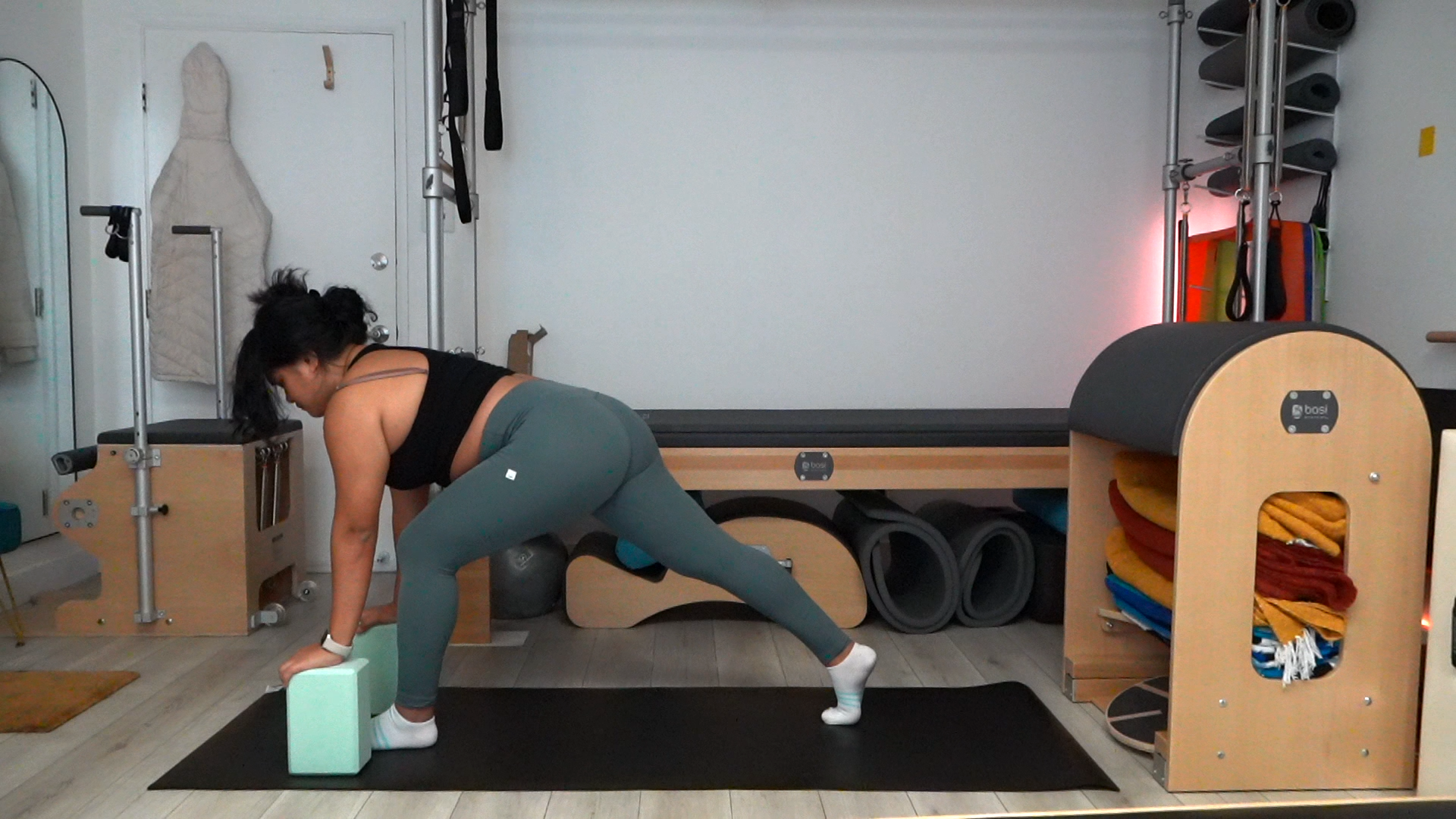
Yoga Blocks for Transitional Crescent Lunge
.